The Great British Insulation Scheme is an ECO grant that started in May 2023 and will end in March 2026
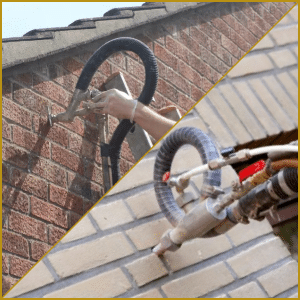
So, what does “The Great British Insulation Scheme in Swansea” offer?
All of the following measures are available, but you can only have 1 measure installed under the scheme. There are some exceptions where Heating Controls can be added as a second measure.
However, in May 2025, the government decided to make Loft Insulation a secondary measure. This means that you can have both Free Cavity Wall Insulation and Free Loft Insulation together.
Although all of the measures below are allowed for in the scheme, not all installers offer all measures.
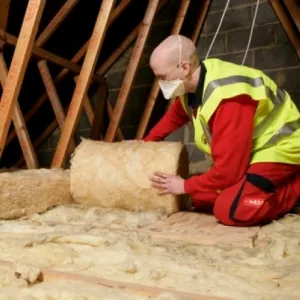
- Free Cavity Wall Insulation – IF YOU QUALIFY, IT WILL BE FREE!
- Loft Insulation – It can be free if together with Cavity Wall Insulation
- External Wall Insulation – Not offered under the Great British Insulation Scheme, but potentially under ECO4
- Internal Wall Insulation – Not offered under the Great British Insulation Scheme, but potentially under ECO4
- Pitched Roof Insulation – Not offered under the Great British Insulation Scheme, but potentially under ECO4
- Flat Roof Insulation – Not offered under the Great British Insulation Scheme, but potentially under ECO4
- Under Floor Insulation – Not offered under the Great British Insulation Scheme, but potentially under ECO4
- Solid Floor Insulation – Not offered under the Great British Insulation Scheme, but potentially under ECO4
- Park Home Insulation – Not offered under the Great British Insulation Scheme, but potentially under ECO4
- Room-in-Roof Insulation – Not offered under the Great British Insulation Scheme, but potentially under ECO4
- Heating Controls (under certain circumstances)
How do I qualify for a Great British Insulation Scheme in Swansea?
There are 2 routes to qualifying for a grant.
- The General Group.
- The “low-income” Group.
The “General Group” qualification for a grant.
2 yes’s and you qualify.
- Is your Council Tax Banding in Wales is A, B, C, D or E (or in England A, B, C or D). – Yes? You can find your Council Tax Banding on Gov.Uk
- Is your EPC (Energy Performance Certificate) rating is a D, E, F or G. Yes? You can find your EPC on the EPC Register
- YOU QUALIFY!
These rules apply to owner occupiers only. Privately renting tenants will need to use the “Low Income” group below (with Landlord’s consent).
The “Low Income” Group qualification for a grant.
The personal qualification criteria for the “low income” group, is benefit based. The qualifying benefits are listed below.
Here is the list of Qualifying Benefits.
- Pension Credit
- Income Based Job Seekers Allowance
- Universal Credit – No income threshold
- Income Related Employment and Support Allowance
- Tax Credits (including Working and Child Tax Credits) – No income threshold
- Income Support
- Housing Benefit – NEW
- Child Benefit/Family Allowance. Income Thresholds apply – see table below
Do I qualify for a Grant if I get Child Benefit?
Yes, you would qualify for a grant if you claim Child Benefit and have an annual income no greater than the appropriate threshold.
The threshold varies between single people and couples, and depends on the number of children you have. See the table below. So, 2 adults with 3 children would have an income threshold of £37,200.
| Number of children | 1 | 2 | 3 | 4 |
| 1 adult household | £19,900 | £24,800 | £29,600 | £34,500 |
| 2 adult household | £27,500 | £32,300 | £37,200 | £42,000 |
How do I apply for a Great British Insulation Scheme grant in Swansea?
You can call us on one of the telephone numbers below, and speak to an expert ECO4 advisor
0800 8 10 10 60
or
07960 799681
or complete one of our enquiry forms
Warm Your Home and Cut Your Bills with Free Cavity Wall Insulation
If your home in Swansea, Carmarthenshire, Pembrokeshire, or Neath Port Talbot feels hard to heat or cool, you could be losing up to a third of your energy through your walls.
With the Great British Insulation Scheme, many households across South and West Wales now qualify for free cavity wall insulation, fully funded under the government-backed Great British Insulation Scheme (GBIS).
Our expert local installers make the process simple — from your free survey and eligibility check to a quick, tidy installation backed by a 25-year CIGA guarantee. Enjoy a warmer, healthier, and more energy-efficient home without paying a penny up front.
Need to know more, still got questions or doubts? Maybe the FAQs below will give you the answers.
Free Cavity Wall Insulation FAQs in Swansea and West Wales
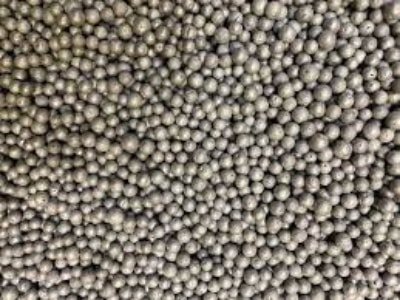
Why We Use “SuperBead” Polystyrene Bead Insulation — Not Fibre
At The Great British Insulation Scheme, we only install “SuperBead” polystyrene bead insulation — never traditional fibre materials such as RockWool.
While “SuperBead” is more expensive to produce, it’s a superior and longer-lasting solution for cavity wall insulation.
The British Board of Agrément (BBA) has rigorously tested and certified “SuperBead” for the following key performance standards:
- Thermal performance: “SuperBead” has a declared thermal conductivity of 0.035 W/m·K, delivering outstanding heat retention.
- Water resistance: The beads effectively prevent water transfer across the cavity.
- Condensation control: By keeping walls warmer, “SuperBead” helps limit condensation within your home.
- Fire safety: “SuperBead” does not compromise the wall’s fire resistance.
- Durability: The material is rot-proof, water-resistant, and stable, ensuring it remains effective for the lifetime of the building.
Compared with older fibre products such as RockWool, “SuperBead” is up to 20% more efficient, reducing wall heat loss by around 70%.
Since walls account for roughly 35% of a home’s total heat loss, installing “SuperBead” can cut your heating bills by about 25%.
The system also requires around 30% fewer drill holes than fibre insulation — and the holes themselves are smaller, resulting in a neater finish.
“SuperBead” has been extensively tested for long-term stability and will not deteriorate over time. It is also fully fire-resistant and approved for use in all weather conditions, even the most exposed coastal areas of Wales.
📞 0800 8 10 10 60 or 07960 799681
📩 Enquiry Form

Yes, we are giving cavity wall insulation customers a £50 thank you for using our services.
It is normally paid within 14 days of the work being completed.
📞 0800 8 10 10 60 or 07960 799681
📩 Enquiry Form
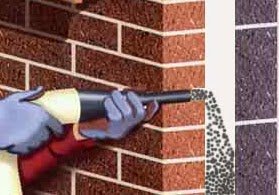
We insulate cavity walls by injecting insulation material into the wall cavity, usually from the outside of the property. In some cases, depending on access and construction, the work can also be carried out from inside the home.
Small 22mm holes — slightly smaller than a 2p coin — are drilled in a precise pattern across the external walls. This pattern is set out in the British Board of Agrément (BBA) certificate for the insulation material being used, ensuring full compliance with national standards.
The insulation material, combined with a specialist adhesive, is then blown into the cavity using purpose-built equipment. Within around 20 minutes, the adhesive sets, bonding the polystyrene beads together into a stable, loosely connected layer that effectively traps heat inside your home.
Once the cavity has been filled, the drilled holes are sealed with coloured cement, carefully matched to the shade of your existing mortar or render for a clean, seamless finish.
Cavity wall insulation is not a DIY task — it requires trained professionals and specialist machinery. A typical three-bedroom semi-detached home usually takes about three hours to complete, with minimal mess or disruption.
Most customers are pleasantly surprised at how quick, tidy, and efficient the process is.
Every installation is backed by a 25-year guarantee from the Cavity Insulation Guarantee Agency (CIGA) — the government-recognised authority for cavity wall insulation — giving you complete confidence and peace of mind.
📞 0800 8 10 10 60 or 07960 799681
📩 Enquiry Form
Are All Homes in Swansea & West Wales Suitable for Cavity Wall Insulation?
No — not every home is suitable, even if it has cavity walls.
Before 1920, most homes in Wales and across the UK were built using solid stone or solid brick walls (two layers of brick or stone laid side by side). These walls had no cavity and were therefore not suitable for cavity wall insulation.
A Brief History of Cavity Walls
Solid walls often suffered from dampness, which led to health issues such as pneumonia and respiratory illness. To solve this, builders began using cavity wall construction — two brick walls with an air gap between them to help keep moisture out.
By the 1930s, cavity walls had become standard in new homes across Wales and the rest of the UK.
Which Homes Are Usually Suitable?
Subject to a professional survey, most homes built after 1930 are suitable for cavity wall insulation — but it’s important to emphasise that this is always subject to survey.
There are three main exceptions where insulation is not recommended:
- 🏘️ Concrete-built properties – Often ex-council houses, some of these have cavities but should not be insulated due to the risk of concrete cancer.
- 🪵 Timber-framed homes – These have an external brick layer and an internal wooden frame filled with insulation behind plasterboard. The wall cavity should not be filled.
- 🧱 Newer properties (post-1982) – Building Regulations introduced in 1982 required cavity insulation during construction. However, many homes built in the 1980s and 1990s were left uninsulated or poorly insulated — and, subject to survey, these can still be insulated today.
Check If Your Home Qualifies
To find out whether your property in Swansea, Llanelli, Carmarthen, Haverfordwest, Pembroke, or the surrounding West Wales area qualifies for free cavity wall insulation, simply complete our quick enquiry form or give our team a call.
We’ll arrange a free, no-obligation survey to confirm suitability and guide you through the next steps toward a warmer, more energy-efficient home.
📞 0800 8 10 10 60 or 07960 799681
📩 Enquiry Form

Your 25-Year Cavity Wall Insulation Guarantee in Swansea & West Wales
Yes — every cavity wall insulation installation we complete in Swansea, Carmarthenshire, Pembrokeshire, and across West Wales comes with a 25-year guarantee issued by the Cavity Insulation Guarantee Agency (CIGA).
CIGA provides an independent, government-recognised guarantee for cavity wall insulation fitted by registered installers throughout the UK and Channel Islands — including all free installations carried out under the Great British Insulation Scheme.
However, a CIGA guarantee can only be issued once the property has successfully passed a Cavity Assessment Survey (CAS).
Without this approval, a grant cannot be awarded, ensuring that only suitable homes are insulated to the highest standard.
About the Cavity Insulation Guarantee Agency (CIGA)
CIGA was established in consultation with the UK Government’s Energy, Environment and Waste Directorate (part of the former DETR) to offer homeowners a consistent, trustworthy, and independent guarantee covering both materials and workmanship.
The Government considers cavity wall insulation to be “the most cost-effective energy-saving measure that most households can carry out on their homes” and a vital part of reducing carbon emissions across the UK.
Independent research conducted for the Department of the Environment, Transport and the Regions (DETR) confirmed that cavity wall insulation is a highly reliable and proven process.
While problems are extremely rare, CIGA has the expertise and systems in place to ensure any issues are investigated and resolved quickly. The introduction of the Cavity Assessment Survey (CAS) has further reduced the chance of future problems by ensuring that only appropriate properties are insulated.
Built-In Quality and Building Regulation Compliance
CIGA also operates the Cavity Wall Insulation Self-Certification Scheme (CWISC) in partnership with the British Board of Agrément (BBA).
This scheme ensures that all installations carried out by accredited contractors meet or exceed UK Building Regulations, giving homeowners across Swansea and West Wales complete peace of mind.
With this combination of strict surveying, quality control, and a 25-year independent guarantee, you can be confident that your free cavity wall insulation will perform safely, efficiently, and reliably for decades to come.
📞 0800 8 10 10 60 or 07960 799681
📩 Enquiry Form
No!
If you have any damp on your external walls, they should not be insulated until the cause of the damp has been resolved.
In fact, if there is damp, the property will fail the CAS survey, and we will not install cavity wall insulation.
To get a Grant, there must be a 25-year guarantee issued. To get a 25-year guarantee issued the property must pass a CAS survey. If the house has damp, it will fail the CAS survey.
So, if there is damp, there is no Grant – it’s as simple as that.
If, however, it is “Black Mould / Spots”, then this is probably Condensation and not Damp. 90% of the time, Condensation is a lifestyle issue rather than a structural issue. However, Cavity Wall Insulation can help reduce/eradicate the “Black Mould / Spots”.
📞 0800 8 10 10 60 or 07960 799681
📩 Enquiry Form
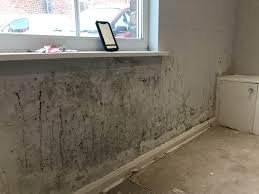
Yes — free cavity wall insulation can make a real difference in reducing or even eliminating condensation in your home.
Condensation occurs when moist, warm air inside the house comes into contact with a cold surface — such as an uninsulated wall or window. Warm air can hold more moisture, but when it cools down on contact with a cold surface, that moisture turns into water droplets.
If these droplets don’t dry quickly, they can lead to damp patches and the growth of black mould — especially in corners, behind furniture, or near external walls.
By insulating your cavity walls, the internal surfaces of your home stay warmer and drier, reducing the temperature difference that causes condensation in the first place.
That’s why properly installed cavity wall insulation in Swansea, Carmarthenshire, Pembrokeshire, and across West Wales can help reduce or even eradicate black mould and condensation problems, while also keeping your home warmer and more energy efficient.
📞 0800 8 10 10 60 or 07960 799681
📩 Enquiry Form
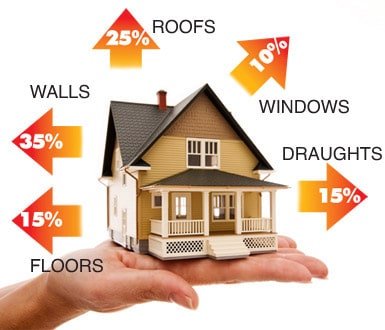
Yes, Free Cavity Wall Insulation in Carmarthen will reduce your fuel bills. It will also reduce your Carbon Footprint, and it can help reduce/eradicate Condensation.
These are the percentages of heat loss through the different parts of a house (see photograph above).
- Walls = 35%.
- Roof = 25%.
- Floor = 15%.
- Draughts = 15%
- Windows = 10%
Uninsulated walls account for 35% of a house’s total heat loss. Cavity Wall Insulation will reduce that heat loss from the walls by 70%. Therefore, your heating costs should reduce by 25%, which equates to savings of £300 to £400 per year.
📞 0800 8 10 10 60 or 07960 799681
📩 Enquiry Form
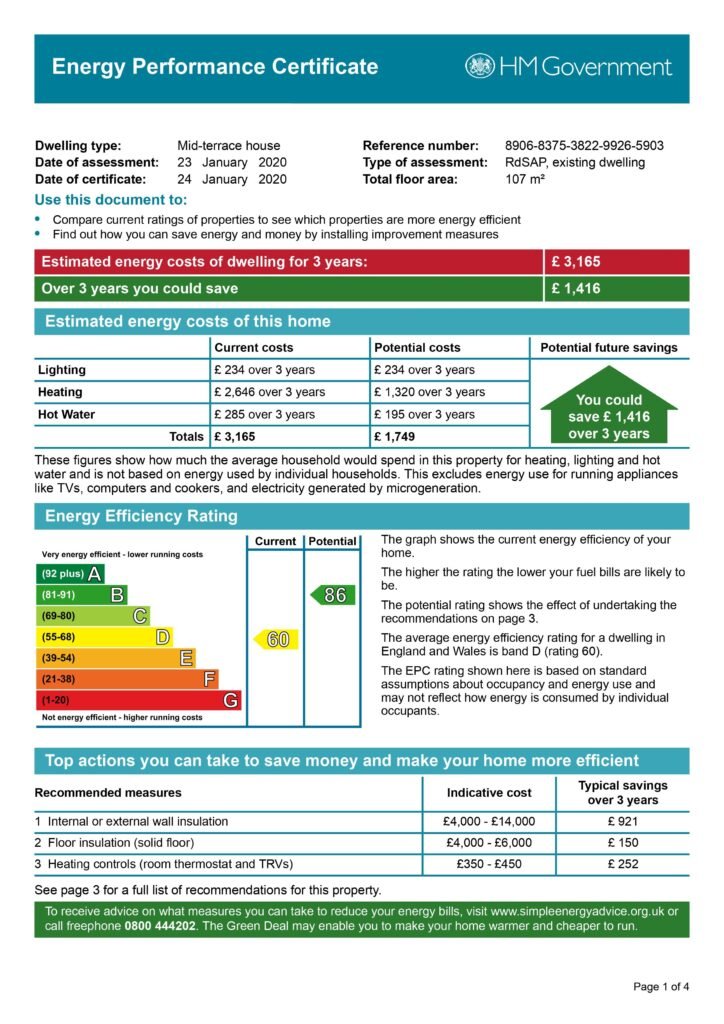
EPC stands for Energy Performance Certificate. The EPC rating is a relative measure of the cost of heating the house and hot water, based on 2.5 occupants. The rating will fall into a banding of A to G. A is the best, and G is the worst.
A property requires an EPC if it is being sold or if it is rented.
They were introduced on the 1st August 2007. So, if you bought your property before that date, you won’t have an EPC unless you have commissioned one.
They are good for 10 years. So you could sell a property with a 7-year-old EPC, but it wouldn’t necessarily reflect the energy efficiency of the property on the day it’s sold. There is talk of reducing the life of an EPC to 5 years.
There are a lot of changes taking place with regard to the input data (in spring 2025) to make the EPC far more accurate.
If you don’t have an EPC, you can still apply for a Cavity Wall Insulation grant.
📞 0800 8 10 10 60 or 07960 799681
📩 Enquiry Form
Cavity Wall Insulation and Damp — What’s the Real Story?
According to the Cavity Insulation Guarantee Agency (CIGA), damp issues occur in fewer than 3 homes out of every 1,000 that have been insulated.
Almost all historical problems with cavity wall insulation (CWI) were caused by unsuitable materials being installed into walls that were not appropriate for insulation, not by the insulation process itself.
From Fibre to Beads — A Better Way to Insulate
In the past, Rockwool was the most common material used for cavity wall insulation across South Wales, including Swansea.
Today, this has been replaced by polystyrene bead insulation, which performs far better in terms of thermal efficiency and water resistance.
When polystyrene beads were first introduced, some installers used the small white “bean bag” style beads. Because of their small size and structure — and the fact that they weren’t water-repellent — they occasionally caused damp issues.
Modern systems now use larger grey or silver beads, shaped like half a coffee bean (or a mix of different sizes) for tighter packing and improved protection. These beads are also impregnated with a water-repellent coating, making them much more effective and durable.
The Real Cause of Historical Problems
In the early days of insulation grants, many issues stemmed from door-to-door sales where people were told they could get insulation for free, but no proper pre-installation survey was carried out.
As a result, unsuitable homes were insulated when they shouldn’t have been, leading to avoidable damp problems.
Massive Improvements in Quality Control
To prevent this from happening again, strict new measures were introduced.
In April 2017, the British Board of Agrément (BBA) — the organisation responsible for certifying that building materials are fit for purpose — took charge of ensuring that unsuitable homes were no longer insulated.
This led to the creation of the Cavity Assessment Surveillance Scheme (CASS).
Then, in October 2018, the scheme’s management was handed to CIGA, and today it is overseen by the Insulation Assurance Authority (IAA).
How the Cavity Assessment Survey (CAS) Works
Under the CAS system, every property must pass a Cavity Assessment Survey (CAS) before installation.
This detailed survey takes around two hours and includes:
- Camera inspections inside the cavity
- Checks on wall condition, cavity depth, and damp proof course
- Assessment of construction type, gutters, downpipes, and drainage
- Identification of any rubble or obstructions in the cavity
Leaking gutters and downpipes are a major cause of damp in homes, so they’re inspected carefully.
All survey data and photographs are uploaded to the IAA’s secure platform for independent auditing.
Every single survey is audited at desktop level, and 1 in 10 properties are also physically rechecked by an IAA surveyor to ensure full compliance.
Greater Confidence Than Ever Before
This high level of quality control has virtually eliminated the risk of unsuitable homes being insulated and has further reduced the tiny percentage of damp-related cases reported.
Before 2017, CIGA estimated that around 3 in 1,000 insulated homes experienced damp problems.
With today’s CAS and IAA auditing systems, that number has dropped even lower — giving homeowners across Swansea, Carmarthenshire, Pembrokeshire, and the wider West Wales region total confidence in the quality and safety of modern cavity wall insulation.
📞 0800 8 10 10 60 or 07960 799681
📩 Enquiry Form
Even if you don’t have an EPC (Energy Performance Certificate), you can still apply for a Cavity Wall Insulation grant using The Great British Insulation Scheme.
As a part of the required survey, we produce an EPR (Energy Performance Report). An EPR uses the same dataset as an EPC, but it is not registered, and you don’t get a certificate.
So, you don’t need to have an EPC!
📞 0800 8 10 10 60 or 07960 799681
📩 Enquiry Form
Insulating the walls of your home offers a wide range of benefits — both practical and financial.
- Lower energy bills: By preventing heat from escaping through your walls, you’ll use less energy to keep your home warm, which can reduce heating costs by up to 25%.
- Improved comfort: Your home will feel warmer in winter and cooler in summer, with fewer draughts and cold spots.
- Reduced condensation and damp: Insulated walls stay warmer, helping to limit condensation and prevent black mould growth.
- Smaller carbon footprint: Using less energy means lower CO₂ emissions, helping protect the environment and support Wales’s net-zero targets.
- Quieter home: Insulation can also reduce external noise, creating a calmer indoor environment.
- Increased property value: A better EPC rating makes your home more energy efficient and more attractive to buyers or tenants.
In short, cavity wall insulation helps you save money, stay comfortable, and make your home greener — for good.
📞 0800 8 10 10 60 or 07960 799681
📩 Enquiry Form
If you are a private tenant, you will need to be in receipt of a qualifying benefit.
However, if you are a homeowner and
your Council Tax Banding is an A, B, C, D or E1 and
your EPC (Energy Performance Certificate) rating is a D, E, F or G?
YOU will qualify for free cavity wall insulation, and you do NOT need to be in receipt of benefits.
You can find your Council Tax Banding here.
and
You can find your EPC rating here.
And there are no income thresholds – if Richard Branson lived next door to you, he would qualify as well.
Footnote 1. In England, Qualifying Council Tax Bandings are only A, B, C, or D.
📞 0800 8 10 10 60 or 07960 799681
📩 Enquiry Form
You would not qualify under the “General Group”, but you could qualify under the “Low Income Group”.
You will need to be in receipt of a qualifying benefit.
Here is the list of Qualifying Benefits.
- Pension Credit
- Income-Based Job Seekers’ Allowance
- Universal Credit – No income threshold
- Income-Related Employment and Support Allowance
- Tax Credits (including Working and Child Tax Credits) – No income threshold
- Income Support
- Housing Benefit – NEW
- Child Benefit/Family Allowance. Income Thresholds apply – see table below. These are gross (before stoppages) thresholds.
| Number of Children | 1 Adult Household | 2 Adult Household |
|---|---|---|
| 1 | £19,900 | £27,500 |
| 2 | £24,800 | £32,300 |
| 3 | £29,600 | £37,200 |
| 4 | £34,500 | £42,000 |
📞 0800 8 10 10 60 or 07960 799681
📩 Enquiry Form
You won’t have to do a thing. We will do it all for you, so you don’t have to worry about piles of paperwork.
Firstly, we will check that you qualify.
If you do, we will then check that your property qualifies. We will carry out a full survey of the property, and if all is good, we will also complete all the grant application paperwork. These surveys will take between 2 to 3 hours.
When we finish the work, we then request the grant funds, which are paid directly to us, and we will give you your 25-year guarantee.
There’s nothing for you to worry about. Just enjoy your lower fuel bills and a smaller carbon footprint.
📞 0800 8 10 10 60 or 07960 799681
📩 Enquiry Form
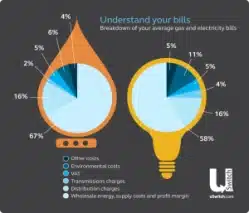
Over the years, the UK Governments have set ambitious, legally binding targets to reduce carbon emissions in order to tackle climate change. Rather than managing the process directly, they’ve effectively passed the responsibility on to the major energy suppliers.
Under this arrangement, gas and electricity companies are legally obliged to help lower the country’s carbon footprint. This scheme is known as the Energy Company Obligation, or ECO for short.
To fund these efforts, a portion of everyone’s energy bill is set aside for what’s called the “green levy.” This means that around 6% of your gas bill and 11% of your electricity bill go towards supporting ECO initiatives that make homes more energy-efficient and reduce emissions.
In other words, while the energy companies carry the legal obligation, we all contribute financially through our bills — as is often the case, we pay for it in the end.
📞 0800 8 10 10 60 or 07960 799681
📩 Enquiry Form
There are 2 routes to qualifying for a grant.
- The General Group.
- The “low-income” Group.
The “General Group” qualification for a grant.
2 yes’s and you qualify.
- Is your Council Tax Banding in Wales is A, B, C, D or E (or in England A, B, C or D). – Yes? You can find your Council Tax Banding on Gov.Uk
- Is your EPC (Energy Performance Certificate) rating is a D, E, F or G. Yes? You can find your EPC on the EPC Register
- YOU QUALIFY!
These rules apply to owner occupiers only. Privately renting tenants will need to use the “Low Income” group below (with Landlord’s consent).
The “Low Income” Group qualification for a grant.
The personal qualification criteria for the “low income” group, is benefit based. The qualifying benefits are listed below.
Here is the list of Qualifying Benefits.
- Pension Credit
- Income Based Job Seekers Allowance
- Universal Credit – No income threshold
- Income Related Employment and Support Allowance
- Tax Credits (including Working and Child Tax Credits) – No income threshold
- Income Support
- Housing Benefit – NEW
- Child Benefit/Family Allowance. Income Thresholds apply – see table below
Yes, you would qualify for a grant if you claim Child Benefit and have an annual income no greater than the appropriate threshold.
The threshold varies between single people and couples, and depends on the number of children you have. See the table below. So, 2 adults with 3 children would have an income threshold of £37,200.
| Number of children | 1 | 2 | 3 | 4 |
| 1 adult household | £19,900 | £24,800 | £29,600 | £34,500 |
| 2 adult household | £27,500 | £32,300 | £37,200 | £42,000 |
Apply Today and Start Saving
Don’t let another winter’s heat go to waste.
Find out in minutes if you qualify for free cavity wall insulation in Swansea or West Wales.
✅ Free, no-obligation survey
✅ Fully funded installation
✅ Government-approved guarantee
👉 Apply Now or call our friendly local team to book your free home survey today.
